Sigma 70mm F28 Dg Macro Art Lens for Sony E Review

Sigma'south first macro lens in the Art series has flown somewhat under the radar, overshadowed by the more flamboyant lens announcements (Sigma 14-24mm f/2.8 ART, 105mm f/1.4) along with the annunciation of the Sony Iron retrofit of the Art serial. Sigma'south approach is a little different from the established conventions in focal length, focus method (the lens focuses externally and employs a focus-by-wire organization), and eschews the paradigm stabilization that most mod macro lenses utilize. What they have done, however, is focus on the ART series priority – optical performance – on which the Sigma 70mm f/ii.8 DG Macro Art definitely excels. It is extremely abrupt at all focus distances. It too has weather sealing, and, continuing in the delightful trend from the 14-24mm ART, it is fully compatible with Canon's Lens Aberration Correction (just the 2d tertiary political party lens that this is true of). Simply are these things enough to make the 70 Fine art Macro worth calculation to your kit? Read on to find out!
Check me out on: Google+: | Facebook: | Twitter: | Flickr: | 500px: | Sign Up for My Newsletter :
Prefer to watch your reviews? You can see my full video review here:
Sigma seventy ART Macro Build and Blueprint
I refer to this lens as being somewhat quirky, mostly because it is seems somewhat out of stride with everything else that Sigma has done recently. Sigma has carved out a niche for the Art serial by offering high resolution lenses (which this lens does authorize for!), merely also by offering lenses with wider maximum apertures that what is typical, be it at that particular focal length or zoom range. 70mm is a slightly oddball focal length, and the maximum discontinuity of f/2.8 is in no way unusual. For a closer expect at the lens, check out this video episode where I take you up close and personal with the lens:
What makes this lens unusual for a 2018 release is what is missing, namely an internally focusing pattern and a lack of Os (an optical stabilizer). This is too the offset ART series lens (for DSLRs) to non have Sigma'south HSM focus motor (HyperSonic Motor) – a ring-type focus motor. Let'due south take a moment and examine what each of these things mean.
First of all, this lens is not internally focusing, which means that the inner barrel extends like a piston when focusing towards the macro range. In fact, you can actually go reproduction ratios by seeing the markings on that inner barrel as it extends:
Sigma has this to say on the topic: "In recent years, macro lenses in the standard range have tended to employ inner focusing with the goal of maximizing autofocus speed. In contrast, the new SIGMA 70mm F2.eight DG MACRO | Art lens is designed to prioritize optical performance, fulfilling the demanding image quality requirements that define the Art line." I've used a lot of internally focusing lenses with amazing optics, but I've also got ii lenses that externally focus and are incredibly precipitous (Zeiss Milvus 2/135mm and Voigtländer APO-Lanthar 65mm f/2 Macro). I'thou not sure that I follow the reasoning of why Sigma conflates external focus and paradigm quality, merely the lens does have splendid epitome quality, so I'll concede this betoken to them. On a practical level know that using the lens hood hither is particularly important, every bit at no time does the forepart element exceed the length of the lens hood, meaning that the forepart elements stays protected…if you are using the lens hood. Here yous can see what things look like with the lens hood in place and the lens completely focused to macro.
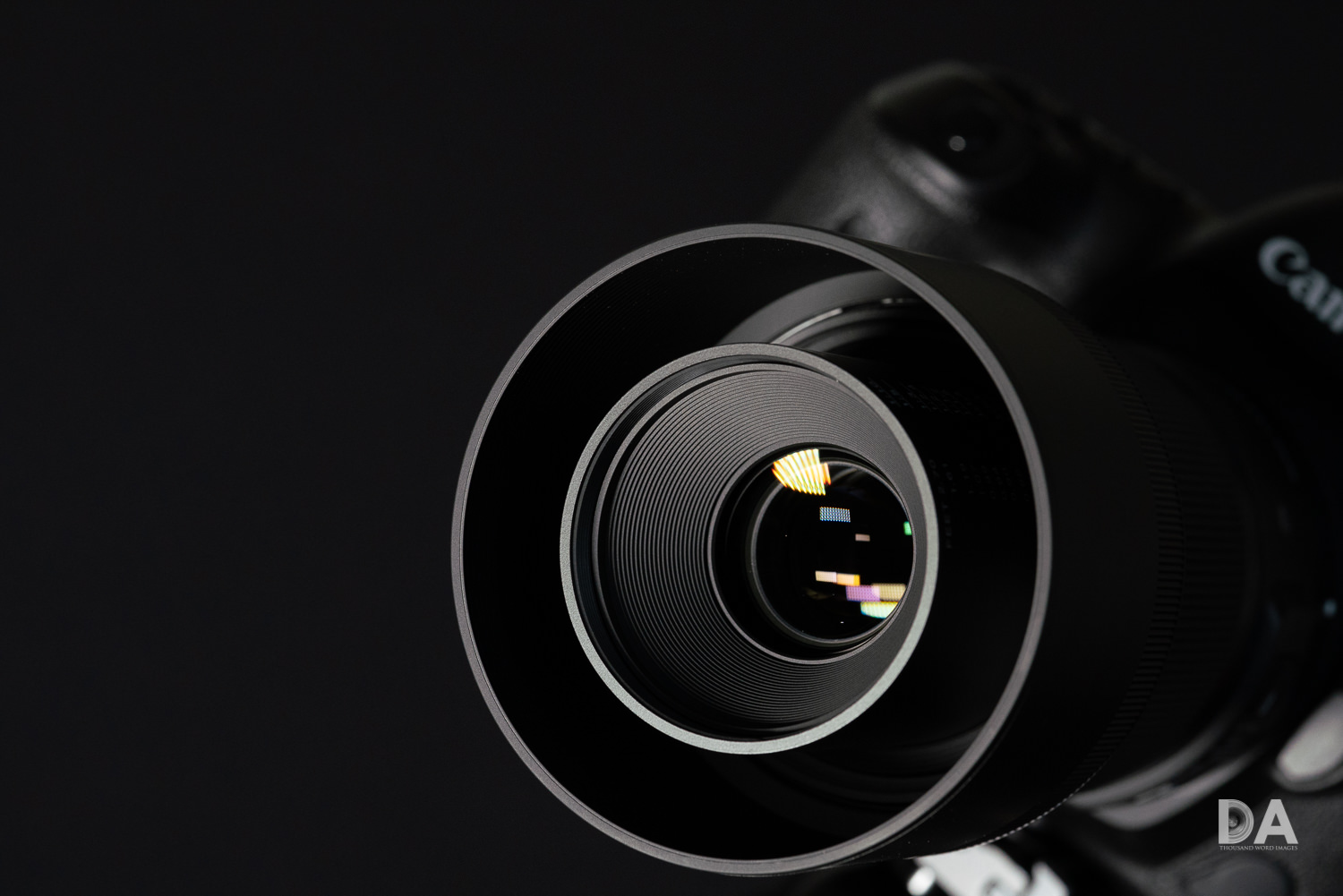
A byproduct of this inner barrel extension is that the lens has a adequately tiny filter thread of but 49mm. The lens bucks the general trend of Sigma Fine art lenses being large and heavy all around, in fact, as the lens is a moderate 2.79 x four.17″ / 70.8 x 105.viii mm (Bore x Length) and weighs 1.13 lb / 515 thou. This isn't small in an absolute sense, merely it is very reasonably sized and slightly smaller than some competing lenses.
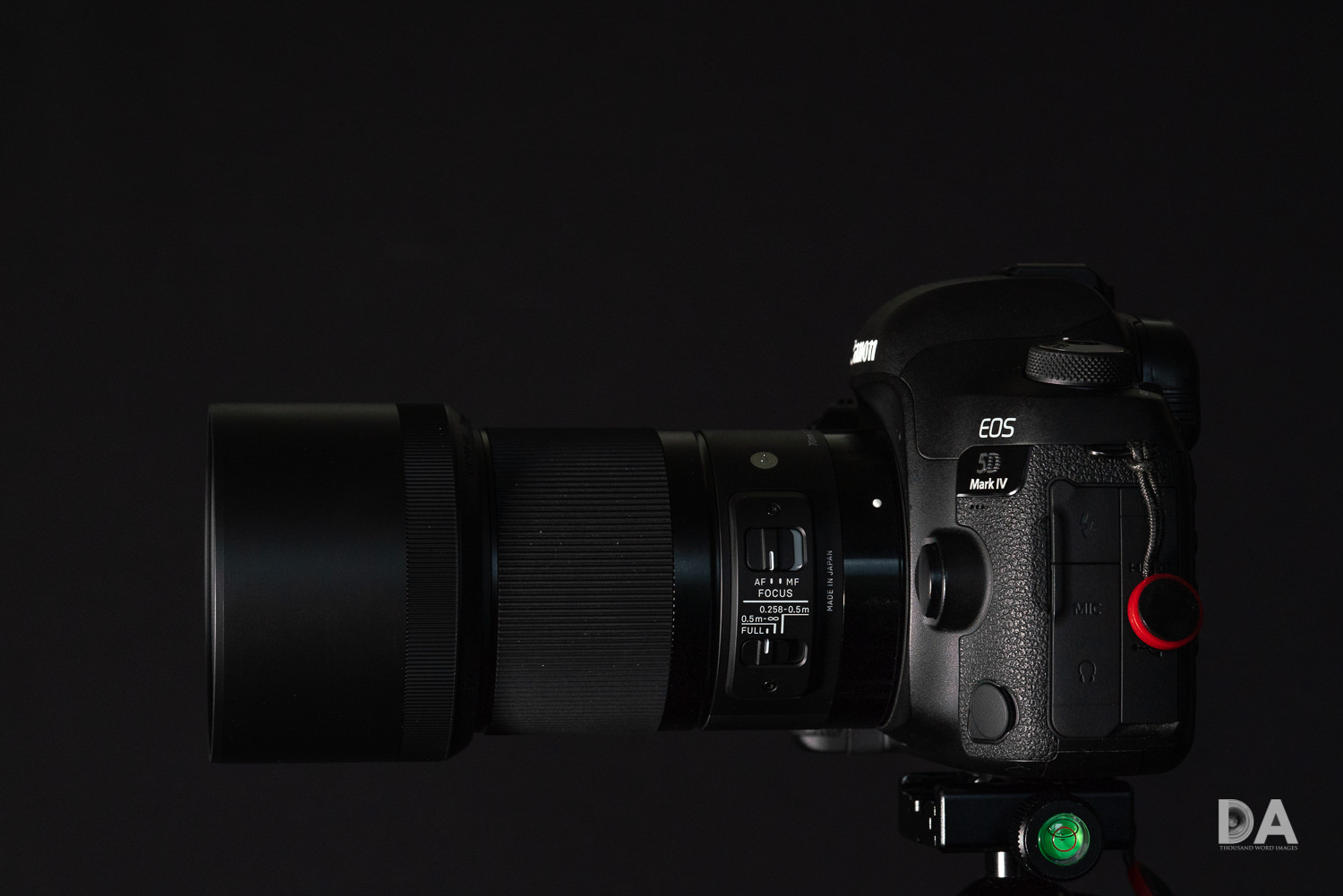
More puzzling is that this lens does not have Bone. Pretty much everyone started putting paradigm stabilization in their macro lenses about 7 years ago because, of all lenses, macro lenses are the most demanding to handhold (at macro distances). Depth of field becomes incredibly small at macro distances, and effective discontinuity reduces (pregnant that the lens needs more and more light the closer you get to a subject). Many hardcore macro shooters work just from a tripod for this reason, though ane still has a trouble if their discipline moves at all. Nearly macro lenses with a stabilizer have one particularly designed for macro piece of work (Canon calls this a "hybrid IS"), and I can attest that it makes a huge difference. Yes, when I'm serious about macro piece of work, I use a tripod, but I too find that macro lenses are very flexible "run and gun" lenses, assuasive one to capture a variety of subjects. If I'm hiking, for example, I don't want to exist carrying a tripod. I found using the seventy Art Macro much harder for this kind of piece of work.
When I used information technology on the a7R3 and it's excellent IBIS (Steadyshot Inside), I was able to shoot a handheld macro like this of the top of a Pepsi can. Good luck doing that on a Canon or Nikon without that stabilization.
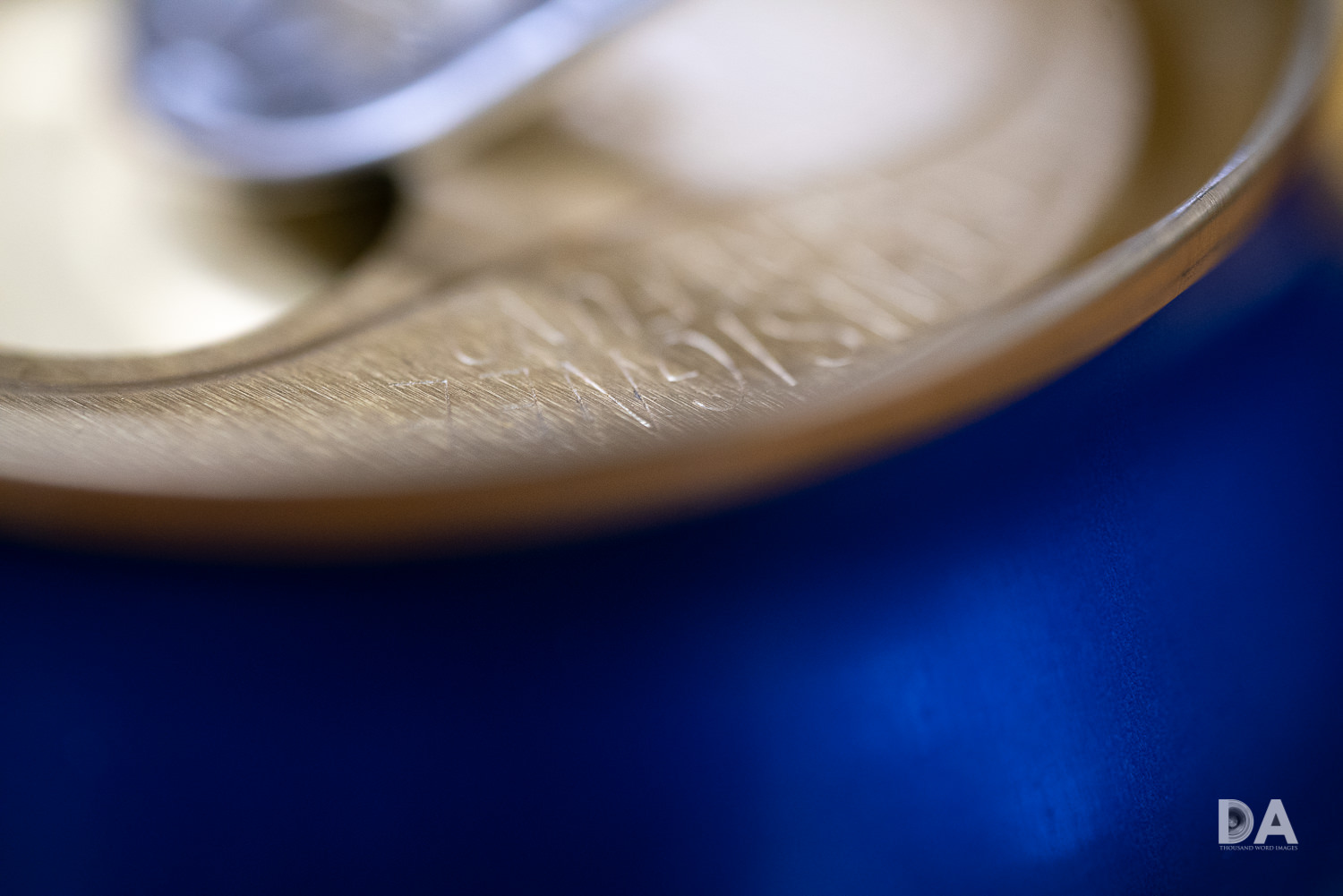
It wasn't so much nigh stabilizing the final result (you tin easily solve that by using a fast shutter speed), but rather more than about belongings the lens nevertheless long enough to focus on the small area where I wanted focus. Suffice it to say that I actually missed OS for the situations where I ofttimes employ a macro lens. Sigma designed this lens for macro purists who are willing to do their macro piece of work from a tripod and are more than concerned with image quality than anything else. Fair enough, only that does limit the entreatment of the lens to a wider audience, particularly when Tamron'south exceptionally good 90mm f/2.8 VC Macro from their SP serial costs only $90 more than. In some ways this lens makes most sense to me on Sony Atomic number 26 where it can take reward of Sony'southward excellent IBIS (In Body Image Stabilization). I think Sigma's determination to exclude Os from this lens is going to haunt them.
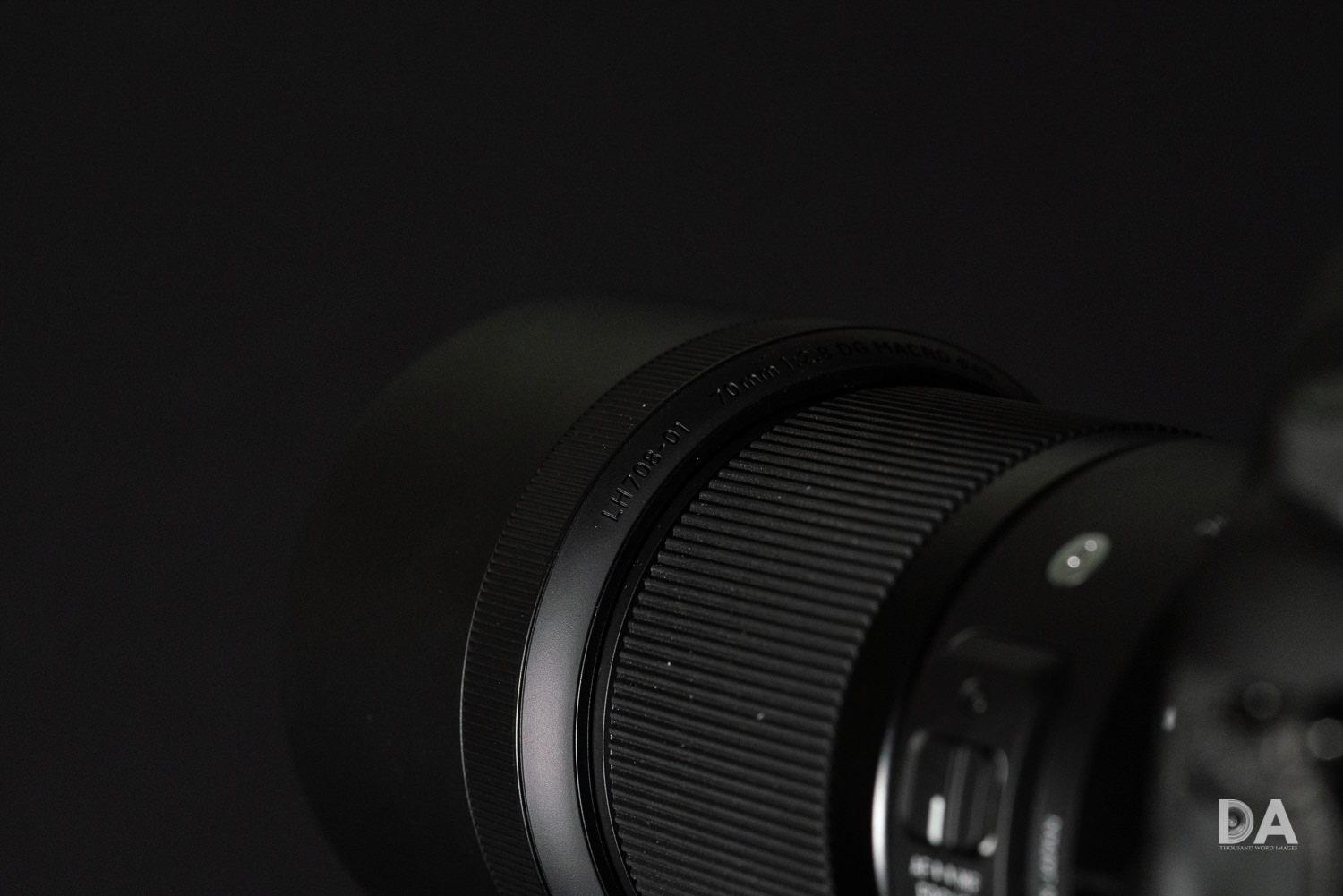
The full general build of the lens is very adept. It has the now-familiar Sigma ART serial design, which is sleek and modern in dark, understated style. The lens comes with both lens hood and a prissy padded, pouch. While it doesn't have more robust weather condition sealing of the new 105mm f/1.4 ART lens, information technology does at least have some dust and moisture resistance at the lens mountain (amend than nil!) The mount is brass and the torso a blend of metals and engineered plastics (or "thermal composites" as per Sigma)!
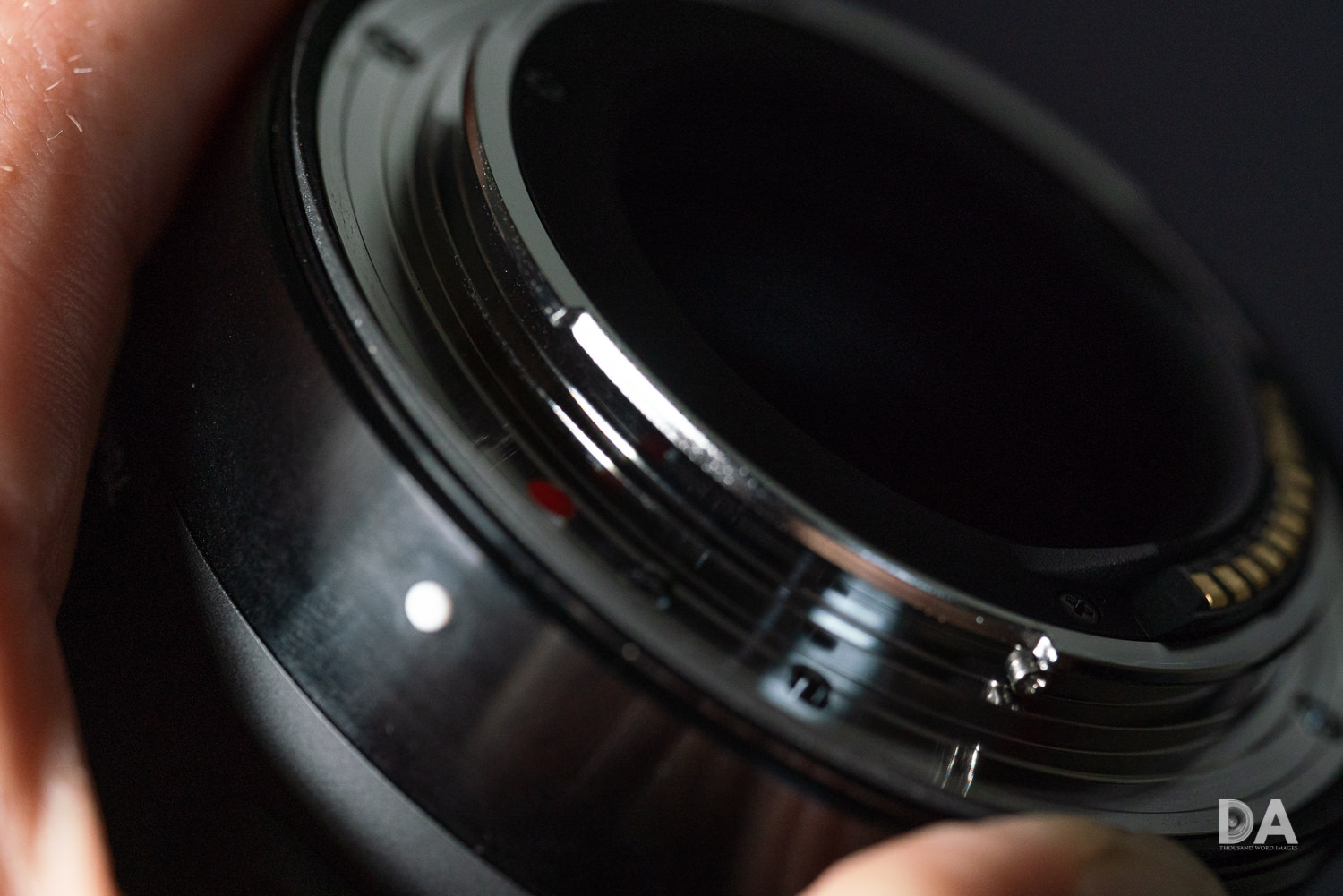
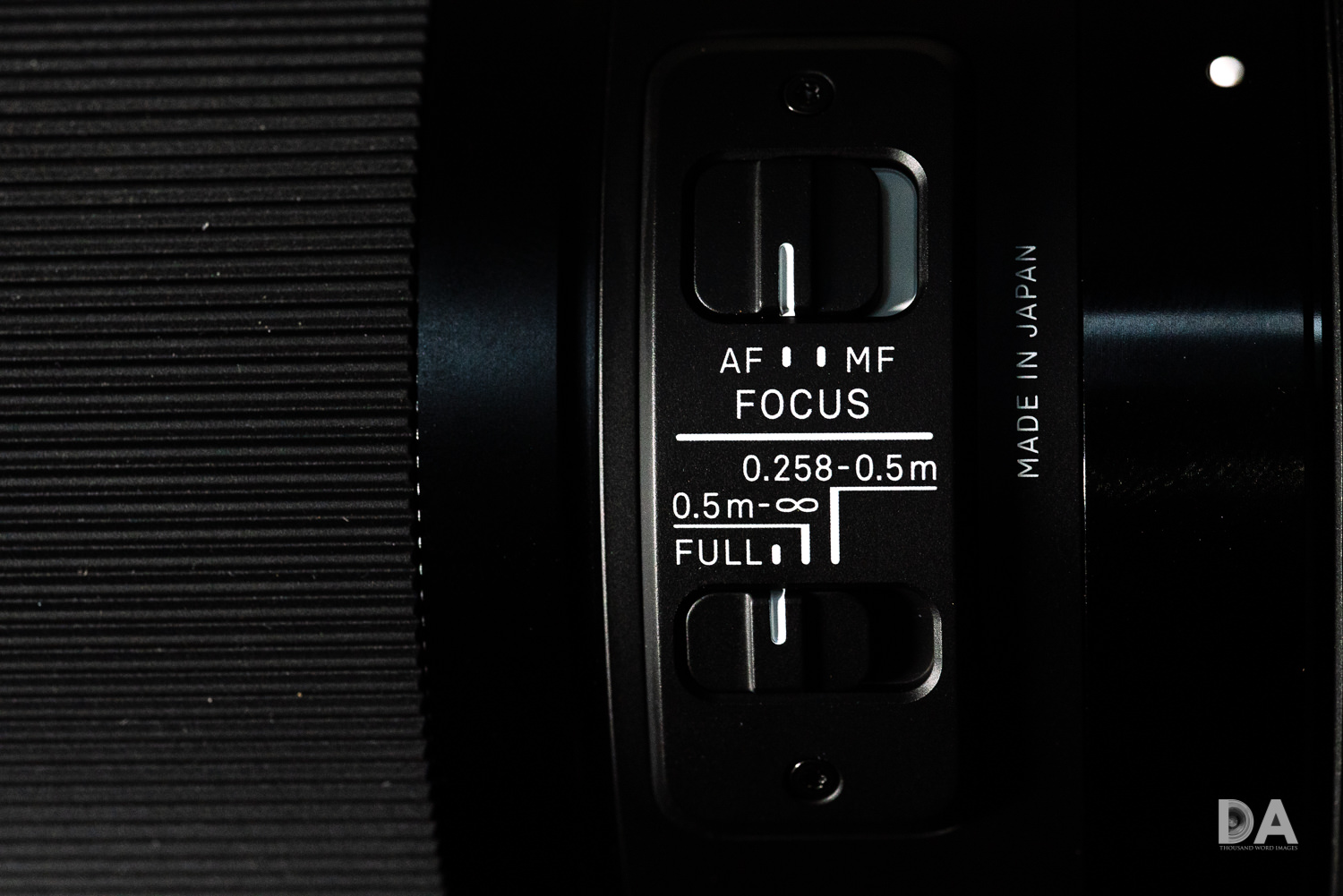
As is typical for Fine art lenses, it employs a nine rounded blade aperture iris pattern, which is very effective at maintaining a circular shape with the lens stopped down. The minimum focus distance on this lens is x.16″ / 25.8 cm, a little lower than either Tamron'south 90mm Macro or Canon'southward 100mm macro options. It is a full i:1 macro lens.
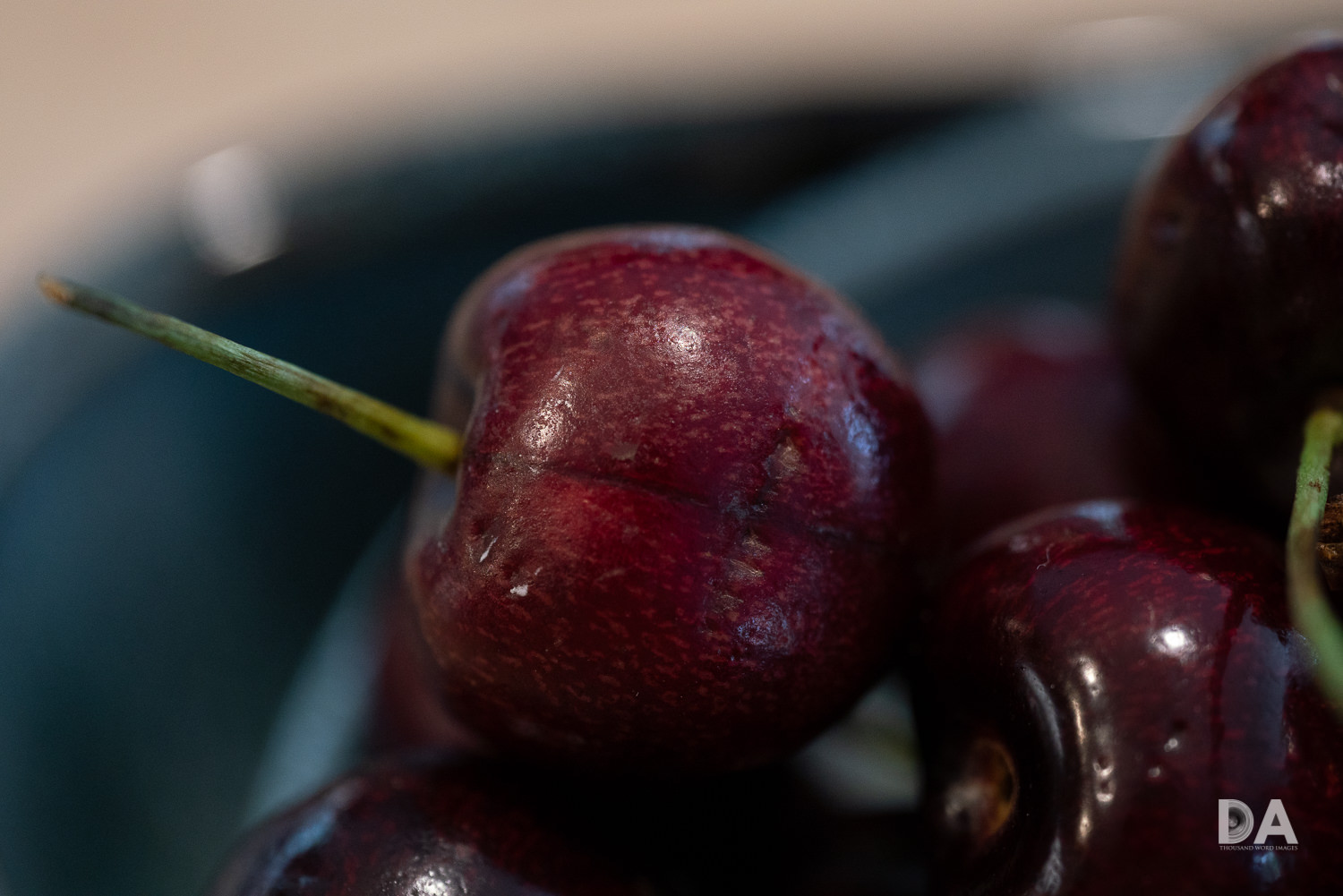
I consider this focal length to be a good pick for those that shoot food or production photography, where the slighter wider framing may come in handy. Those that shoot insects or moving things might prefer the longer working distance of a longer focal length.
Information technology should be noted that this lens is compatible with Sigma's teleconverters, which gives you lot a few options. It tin also be used with Sigma'southward USB dock (for firmware updates, focus calibration, and more than), is eligible for Sigma'south mount conversion service, and also is compatible with the MC-11 adapter for Sony (though with a few quirks).
Sigma 70 Art Macro Autofocus
The final somewhat odd chemical element of the Sigma 70 ART Macro is Sigma'due south decision to go with a focus-by-wire system rather than a traditional HSM motor hither. I'll requite yous Sigma's marketing/explanation followed by my thoughts. "The focus-by-wire organization eliminates the direct mechanical connectedness between the focus ring and the focus drive system. Controlled by SIGMA's latest algorithm, a newly developed coreless DC motor adjusts focus with optimal speed and low noise. Full-time manual focus is bachelor fifty-fifty during autofocus, allowing the photographer to brand minute focus adjustments but by turning the focus ring. In addition, the focus ring's big angle of rotation helps the photographer achieve the extremely precise focusing required for constructive macro photography."
I'chiliad afraid I can't consume all of this. First of all, Sigma'south HSM motors are typically fairly quiet anyhow, and the statement about "optimal speed" is pure marketing – the autofocus is quite slow, particularly if you lot are doing major focus changes. Using the included focus limiter is going to exist key here, as focus speed is fine for smaller focus changes. Going from macro to infinity is somewhat leisurely, though.
At first I thought this was a wise decision by Sigma, as it seemed like the lens was going to be a natural to conform to to mirrorless. Sigma ART lenses are some of the very all-time lenses to adjust to Sony Iron already due to their MC-11 doing a great job in helping lenses make that transition. I was somewhat disappointed past what I found when adapting the lens to my Sony a7R3, though, as the lens tended to chase at times, get stuck sometimes, and in other occasions refused to focus on the foreground object that I wanted it to focus on. In this image of a blossom, for example, the camera refused to focus on a very obvious foreground subject. In the 2nd epitome I actually manually focused into the correct zone, and the focus system "woke back upwardly" so.
The paradigm quality results were excellent (this is an optically superior lens!), only I didn't peculiarly enjoy the experience due to the inconsistent character of the focus. I'm actually interested in testing an actual Atomic number 26 mount lens, equally I doubtable it will operate much better. I did check both the lens and my MC-11 for firmware updates, merely while at that place was an MC-11 update, it didn't address my issues. Peradventure a future firmware update to i or the other volition improve this performance. Here's a few shots taken with the Sigma/Sony combo:
A byproduct of the focus-by-wire system is that the traditional distance window is eliminated from the barrel, though if you lot have off the lens hood and look at the barrel markings you will become a similar effect. Focus-by-wire lenses require the camera to exist on and awake earlier whatsoever input to the transmission focus ring does annihilation. There is no direct coupling to the elements, so all input has to be routed through the focus motor. I'chiliad skeptical that this is what macro photographers actually want as these systems tend to accept poorer tactile feedback and less precision, though, to exist off-white, focus-past-wire systems are vastly improved over where they were a few years ago. You can apply full-time transmission override, simply the camera must be on and active for this to work. Permit'due south simply say that this lens is no Zeiss for manual focus bliss.
On a far more positive note, the autofocus accuracy was by and large splendid right out of the box in my tests on my Catechism 5D Marker IV. I didn't experience that any calibration was necessary, as the lens nailed focus again and once more. There was ane oddity, though. I have a setting enabled on my 5D Mark 4 where only the cross-type AF points supported by a given lens will testify up (I value accuracy over having more points). I had the fewest points available to me of any lens I've used, with only the center group lighting up for some reason. I've used a lot of Sigma lenses before and never seen anything similar that before.
This lens would be too slow to keep up with very fast action, merely I did shoot a few things moving moderately fast (similar the Luge riders at the Skyline Luge Mont Tremblant) and was able to cease that activity fine.

All in all, the focus organization leaves me with some unanswered questions. Information technology probably makes most sense on Sony, but I was surprised that the experience with MC-eleven was really sub-par compared to other Fine art lenses adapted with it (the 105mm f/one.4 ART I was reviewing at the same time worked very well). It works fine in what it does, and focus accuracy was fantabulous, but the slower focus speed, limited focus points, and the disappointing MC-eleven functioning left me a little underwhelmed.
Sigma 70 Fine art Macro Image Quality
To this indicate in the review, I'1000 sure yous've gotten the impression that I'thousand somewhat awestruck by the seventy Art. Fortunately, this is where things take a definite turn for the ameliorate. Sigma made this lens all about the paradigm quality, and it delivers here in spades. For those of you that have skipped right here, hither's a brief epitomize of this focal length (a somewhat anarchistic one). I like shorter macro lenses for things like food and product photography, where a longer lens is sometimes a detriment. I do a lot of piece of work in my Angler Port-a-Cube light tent, and my Canon 100L Macro is sometimes a little tight for that kind of space. I don't like the 70mm focal length too for portraits or used as a short telephoto, as information technology doesn't shrink the image as much or accident out the groundwork the aforementioned way. It also doesn't have every bit big of working distance as longer focal lengths for photographing insects or other things that might exist scared off by getting too close. Y'all need to determine how yous intend to use your macro lens and whether this focal length is an asset or liability for the kind of work you want to do.
The seventy ART is supported by Canon's Lens Aberration Corrections in camera, which is a huge recent evolution for Sigma. Prior to the release of the 14-24mm f/2.8 Art lens no third political party lenses were supported by Canon's in camera corrections, which was a baked-in reward for first party (Catechism) lenses. Somehow Sigma has gotten admission to this (well-nigh likely through some kind of internal agreement with Canon), which now extends this advantage to Sigma (other tertiary party lenses that I've reviewed in this aforementioned time flow are NOT supported). The 70 Art is the third Sigma lens in the by few months that I've reviewed that has been supported, and it is a meaning advantage for these lenses. What this ways is that all of your JPEGs are fully corrected in photographic camera for things like vignette, chromatic aberrations, and baloney (if you enable these corrections). In this case, the lens really has relatively few problems in any of these areas (other than vignette at f/two.eight) it does enable you to get great looking JPEGs right out of photographic camera. This is particularly helpful for the times you A) need to quickly get images to clients without an opportunity for editing or B) want to testify images to clients. I like to shoot with RAWs recorded to one carte and JPEGs to another for this purpose. Sigma's new admission to this allows their lenses to compete on a level playing field with Canon lenses in the Canon infinite, and gives them an advantage over other third party lenses for now. Sony is non restrictive on 3rd party lenses, so the Iron mount will have similar Sony support…but that's not unique or unusual. For Catechism shooters, however, this is a large bargain.
My coverage of prototype quality falls into two categories: 1) Resolution, where I cover sharpness and contrast and 2) Rendering, which looks at the global look of images in areas like color rendition, bokeh, flare resistance, chromatic aberration, etc… I would recommend that you lookout the post-obit video episode where I interactively breakup the optical performance of the 70 ART in detail:
Resolution:
I used a stiff competitor in this field as a benchmark for this comparison – the Canon EF 100mm f/2.8L IS USM. I've owned this lens since presently after its release and have used it for literally thousands of production shots for dozens of companies. I've likewise used it as a indicate of comparison for variety of other macro lenses released since I've endemic it. While the focal length isn't identical (Sigma lone makes a 70mm Macro), I've made minor adjustments to the camera position to accommodate the difference in framing.
With both lenses wide open up (f/2.viii), I discovered the following. Both lenses metered identically and seemed to deliver like light transmission. Both lenses exhibit some vignette to roughly equal degrees, and neither lens shows whatsoever visible distortion (very important in a macro lens!) The vignette will be cleared up either in post (by applying a lens profile), or tin be corrected for in-camera for JPEGs with either lens. Both lenses show roughly equal amounts of eye sharpness and contrast, but the Sigma is a petty better along the edges of the frame (though both lenses are first-class across the frame). This is a very stiff performance, as the Catechism is an exceptionally practiced lens. The Sigma delivers just a slightly warmer color temperature than the Canon (a typical Sigma trait).
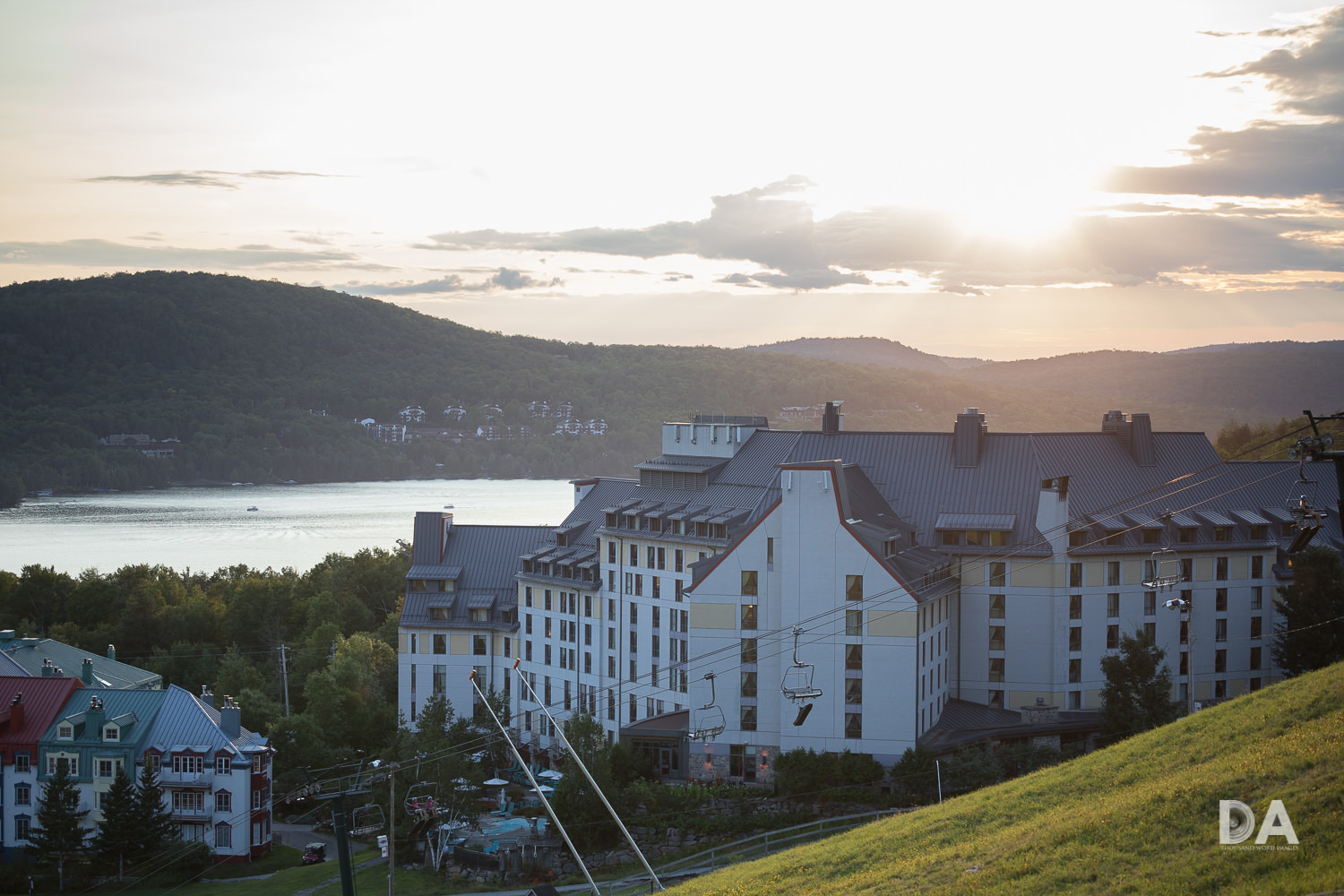
As you can see from the crops from this handheld landscape photo, the image quality is nearly perfect even wide open from the Sigma seventy ART.
At f/4, the vignette more often than not clears away on both lenses and they testify a fairly even illumination across the frame. Yous tin can see from this comparing just how much the vignette lifts (this is from the right upper corner).
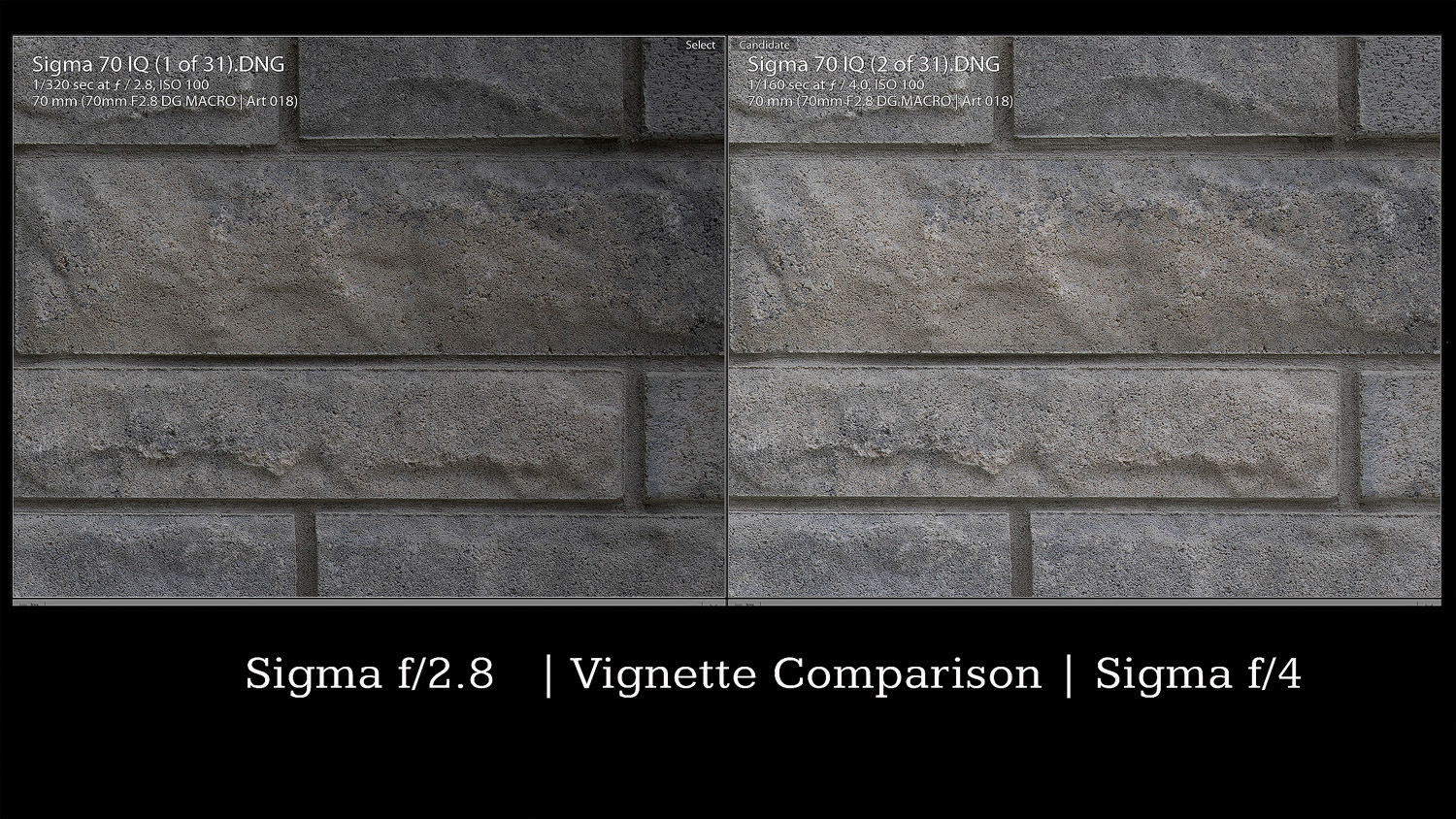
The Sigma makes a more meaning bound than the Canon at f/four, and the edge operation is just brilliant. The Sigma shows slightly more resolution along with higher microcontrast levels. Note how there is no haze in the stone textures anywhere. This is basically a perfect optical performance.
There is niggling more to exist gleaned when stopping the lens down further, equally both lenses deliver fantastic optical performances stopped down.
The Sigma 70 ART can exist stopped downward to f/22, though except that diffraction volition start to cause a bit of softness to pitter-patter in at smaller apertures beyond f/11 (how much depends on the resolution of your camera body). Hither's a few more shots at typical landscape apertures (f/5.6-f/eight) that show only how fantastic the lens is for resolving even at infinity.
Rendering
We've seen that the Sigma 70 ART is a fantastically precipitous, contrasty lens, but what about other metrics? Allow'due south have a look at a few more comparisons with the Canon to glean a few more insights. In these comparing photos, we will wait at the three things: ane) the overall rendering in terms of the "look" of the images including global contrast, colour rendition, and bokeh. ii) the microcontrast – local contrast at a pixel level and how it affects textures and 3) the bokeh rendering (defocused area).
In these comparisons it becomes clear what the 70 ART's strengths and weaknesses are. It is a strong lens when it comes to color rendition, global contrast, and microcontrast. In both primary images and microcontrast crops you lot tin can encounter that the contrast metrics favor the Sigma (all settings were equal hither). The plane of focus shows fantastic degrees of contrast and the colour rendition looks great.
The great claiming for a lens like this, still, is to practice the reverse in the defocused region, where you want less contrast and no sharpness. You want a flossy out of focus area without difficult lines. The Catechism is the better lens here, with noticeably softer, creamier bokeh.
At macro distances, nevertheless, this is less of an issue. Here's a look at near-macro framing at f/2.8, f/4, and f/5.six:
Moving in fifty-fifty closer, and the bokeh looks beautiful.

I too liked this image, where I felt like the great contrast helps my subject to stand out even though I was quite a altitude from him when taking this shot.

Here'south a substantial gallery of "bokeh" images taken at a diverseness of focus distances and so that y'all can decide for yourself if the seventy Art's blend of bokeh and sharpness works for you.
What's indisputable is that Sigma has nailed chromatic abnormality correction on this lens. The primary reason for that very high microcontrast is an extremely low amount of CA. In this photograph of water aerosol (it's not monochrome), just a depression color field of study), there is no visible CA before or later on the plane of focus.
I likewise find these white blossoms to be a hotbed of chromatic aberrations because of the high contrast inherit to them…simply there are none to exist seen, even at f/2.8 here.

This really helps the lens to smooth for food or product photography, which, as you lot can see from these images, it does very well at:
Flare resistance was too a strength for the lens. I didn't torture exam it, per se, merely it worked well in all of the existent-world shooting situations I found myself in:
Then, outside of some slightly busy bokeh in some situations, I call back the image quality from this lens is exceptional. I would encourage yous to visit the Lens Image Gallery and look at more photos. Evaluating real photos is very beneficial for evaluating what a lens is capable of. I purposefully do minimal editing on these images then that you can ameliorate evaluate its potential.
Conclusion

As I said previously, the Sigma 70mm f/ii.8 Macro | Fine art is a somewhat quirky lens. It deviates from the path established for the ART series on a number of levels, and also deviates from the modernistic standard of what a macro lens should have (Epitome Stabilization, Internal Focus, etc…) The one expanse where information technology is very much a Sigma ART lens is in the optical functioning, where information technology delivers as proficient a performance equally I've seen from a macro lens outside of bokeh that is a picayune busy in some situations. I'chiliad less impressed by the decision nigh the focus motor, at least on DSLRs, and frankly surprised that the performance on Sony via the MC-11 (at the moment) isn't better. I'chiliad sure that the Fe version optimized for Sony probably works well, and the choice to go with the focus-by-wire DC focus motor makes perfect sense there. In fact, I wonder why Sigma didn't just go all in and develop this lens purposefully for Sony. The lack of OS is not really an issue at that place, and they could accept probably made it even smaller and more attractive by purposefully designing it at that place. The reasonable price point (this is the least expensive lens in the Fine art series) would have made information technology very attractive to Sony buyers as Sony's 90mm f/2.8 Macro, while reportedly excellent, costs twice as much. The lens that Sigma made seems somewhat stuck between a mirrorless and DSLR lens, and suffers for it despite its fantastic optical performance. I'grand left with the determination that Sigma designed this lens mostly for macro shooters who desire this kind of focal length for defended macro work and typically piece of work from a tripod. For those of you that want a full general purpose macro lens that can double as a portrait lens, consider other options. The Tamron SP 90mm f/ii.8 VC that I reviewed here is a compelling culling.
Pros:
- Solid build including some atmospheric condition sealing at the lens mount
- Compatible with teleconverters, Sigma MC-11, and USB Dock
- Exceptional prototype quality at all apertures
- Fantastic microcontrast
- Low distortion
- Perfect chromatic aberration control
- Good flare resistance
Cons:
- Focus motor quite deadening
- Lacks an prototype stabilizer
- Focus-by-wire not optimal for macro photographers
- Inconsistent performance on Sony via MC-11 (Atomic number 26 version works fine)
- Bokeh tin be slightly busy at some focus distances
Gear Used:
Sigma 70mm f/2.8 DG Macro Fine art: B&H Photo | Amazon | Amazon Canada | Amazon United kingdom of great britain and northern ireland | Amazon Federal republic of germany | Ebay
Canon EOS 5D Mark 4 (5D4): B&H Photo | Amazon.com | Amazon Canada | Amazon UK
Sony a7R Three Camera: B&H Photo | Amazon | Amazon.ca | Amazon UK | Ebay
Elevation Design Slide Low-cal: Tiptop Design Store | B&H Photo | Amazon | Amazon Canada | Amazon Great britain
Sony a6500: B&H Photo | Amazon | Amazon.ca | Amazon UK | Ebay
Peak Design Leash Strap: B&H Photo | Amazon | Amazon Canada | Amazon UK
BenQ SW271 4K Photo Editing Monitor – B&H Photo | Amazon | Amazon.ca | Amazon Great britain
Adobe Photoshop Creative Deject 1-Year Subscription
Alien Peel Exposure X2 (Use Code "dustinabbott" to get 10% anything and everything)
Purchasing your gear through B&H and these links helps fund this website and keeps the articles coming. You tin can also make a donation here if you would like. Visit my Amazon page for some of my gear of choice! Thank you for your support.

Neat News! I can now offer a five% discount on all purchases at Amplis Foto, Canada's Leading Photographic Supplier. Please enter disbelieve code: AMPLIS52018DA in your cart. Information technology is proficient for everything in your cart, and is stackable with other coupons, too! Information technology will have 5% off your entire order! Proceeds go towards keeping this site going and providing you lot with new reviews!
Check me out on:
Keywords: Sigma 70mm Fine art, Sigma lxx Macro, Sigma 70mm Macro Art, Sigma 70 f2.viii, Sigma 70mm f/two.8, Fine art, Macro, Sigma 70mm Review, Sigma 70 Fine art Review, Dustin Abbott, Sigma 70mm f/2.8 DG Macro Fine art, Sigma 70mm f/2.8 ART Review, Photography, Sample Images, Video Exam, Sony Fe, Canon 5D Mark Iv, Canon 5D4, Sony a7R3, Sony a7Riii, Sharpness, Bokeh, Autofocus
DISCLAIMER: This article and clarification contains affiliate links, which means that if you lot click on one of the product links, I'll receive a small commission. Every bit an Amazon Associate I earn from qualifying purchases.
Source: https://dustinabbott.net/2018/09/sigma-70mm-f-2-8-macro-art-review/
0 Response to "Sigma 70mm F28 Dg Macro Art Lens for Sony E Review"
Post a Comment